



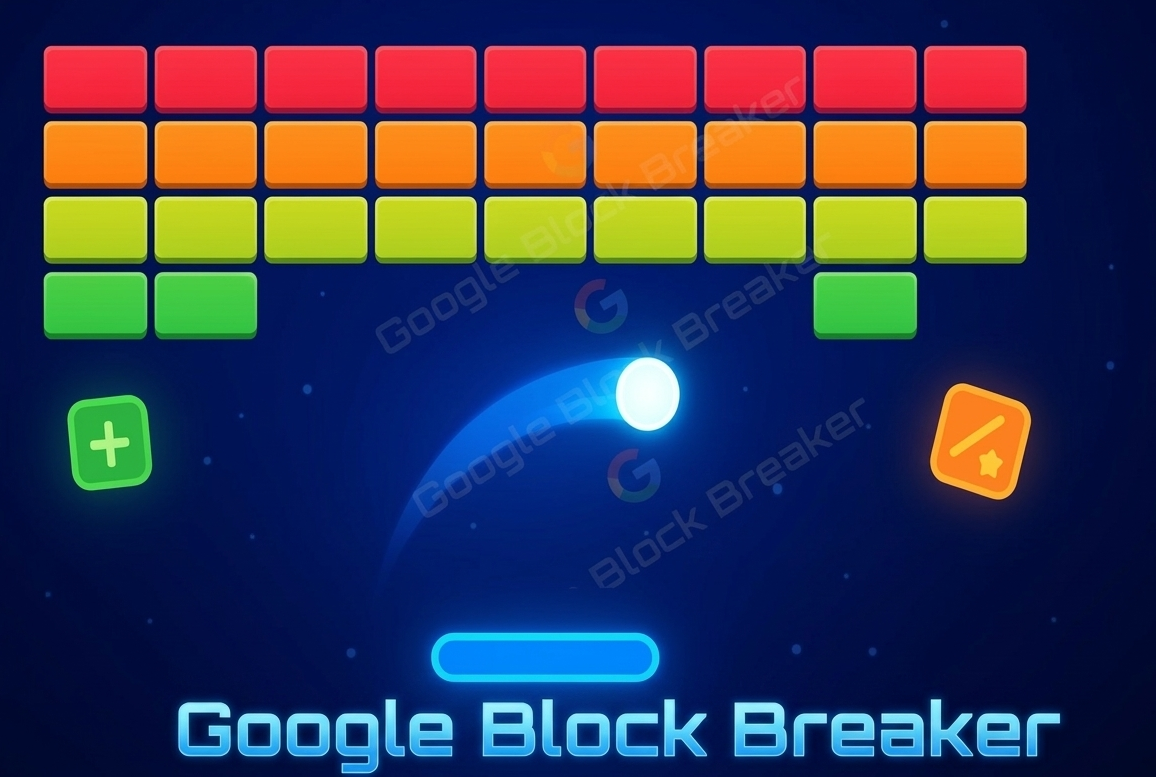
Breakout is one of the most influential arcade concepts in gaming history, and the idea behind Google Block Breaker comes directly from this classic gameplay style. Over the years, the brick-breaking genre has evolved into many variations, but the central concept remains the same: a paddle, a bouncing ball, and rows of blocks that must be destroyed. Google introduced its own playful version of this concept through a hidden Easter egg inside its search ecosystem, turning a simple search page into a mini arcade game.
The term “Google Block Breaker” is commonly used by players and gaming enthusiasts to describe the brick-breaking game that appeared through Google’s hidden experiments. The game captured attention because it transformed the familiar interface of Google into an interactive entertainment experience. Instead of simply displaying search results, the page suddenly became a playable game environment that anyone could enjoy instantly.
The popularity of the game demonstrated how digital platforms can merge productivity with entertainment. Google’s experiments with interactive features and hidden Easter eggs have become well known among internet users, and the block breaker concept stands as one of the most memorable examples of this playful innovation.
The Historical Inspiration Behind the Game
The gameplay mechanics used in Google Block Breaker are directly inspired by Breakout, which was developed and released by Atari in the 1970s. The original arcade game involved a player controlling a paddle at the bottom of the screen while a ball bounced upward to break rows of bricks. The goal was to clear every brick without allowing the ball to fall below the paddle.
Breakout itself was influenced by earlier arcade games, including Pong. While Pong involved two paddles and a competitive format, Breakout transformed the concept into a single-player challenge focused on destroying blocks. The game quickly became popular because it was easy to understand yet difficult to master.
Over time, the brick breaker genre expanded across consoles, computers, and mobile devices. Developers introduced additional mechanics such as power-ups, multi-ball gameplay, and advanced levels. Google’s version of the concept was essentially a modern tribute to this long-standing gaming tradition, connecting internet culture with the roots of classic arcade entertainment.
Google’s Famous Atari Breakout Easter Egg
One of the most well-known hidden features created by Google was the Atari Breakout Easter egg that appeared inside Google Images in 2013. To activate the game, users simply needed to search for “Atari Breakout.” Once the results loaded, the entire page transformed into a playable brick breaker game.
The images displayed in the search results automatically arranged themselves into colorful blocks. A paddle appeared at the bottom of the screen, and the player could control it using the keyboard or mouse. The ball bounced around the screen, breaking the image blocks one by one. The experience closely resembled the classic gameplay of Breakout while adding a modern visual twist.
The Easter egg quickly became a viral discovery on social media and technology blogs. Millions of users tried the game after learning about the hidden feature. It showcased Google’s playful approach to technology and highlighted how creative design can turn an ordinary search tool into an engaging digital experience.
Evolution of the Google Block Breaker Concept
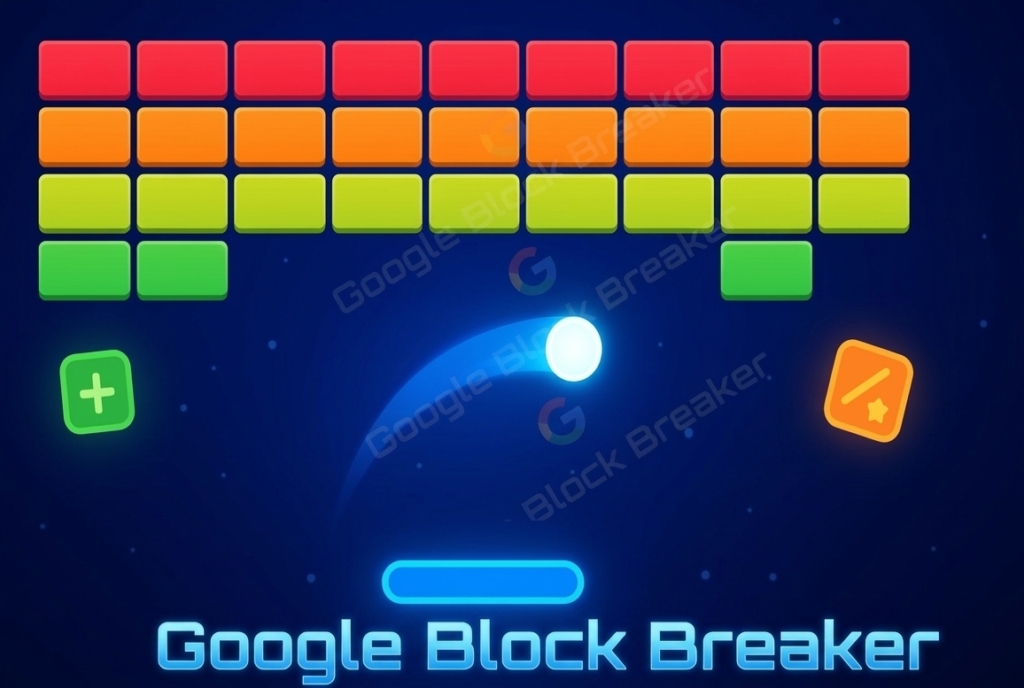
Although the original Atari Breakout Easter egg was eventually removed from Google Images, the concept continued to exist in various forms across the web. Many developers recreated the experience using modern web technologies, and the idea of “Google Block Breaker” became associated with browser-based brick breaker games inspired by Google’s original Easter egg.
Modern web implementations often feature smoother graphics and improved controls. Thanks to technologies like HTML5 and advanced browser engines, these games run smoothly across desktops, tablets, and smartphones. The improved performance allows developers to add more complex levels and dynamic gameplay elements.
The evolution of the concept also reflects the growing importance of browser gaming. Many users prefer quick, accessible games that do not require downloads or installations. By keeping the gameplay simple and instantly playable, the block breaker format remains highly relevant in the modern digital environment.
Gameplay Mechanics and Basic Rules
The core mechanics of Google Block Breaker follow a straightforward structure that makes the game accessible to players of all skill levels. The player controls a paddle positioned at the bottom of the screen while a ball moves upward toward rows of blocks. Each time the ball hits a block, the block disappears and the ball changes direction.
The primary objective is to destroy every block while preventing the ball from falling past the paddle. Players must carefully move the paddle left or right to keep the ball in play. The angle at which the ball hits the paddle determines its direction, allowing skilled players to aim the ball toward specific blocks.
As the game progresses, the speed of the ball often increases, making it more challenging to react quickly. The increasing difficulty keeps players engaged and encourages them to improve their timing and accuracy.
Power-Ups and Advanced Gameplay Features
Many modern versions of the block breaker game include additional features that enhance the gameplay experience. Some blocks release special power-ups when destroyed. These power-ups may temporarily expand the paddle, slow down the ball, or create multiple balls at once.
Multi-ball mechanics are particularly exciting because they allow players to destroy several blocks simultaneously. However, they also increase the challenge because the player must keep multiple balls in play at the same time. This creates fast-paced moments that require quick reflexes and careful paddle positioning.
Other versions introduce special blocks that require multiple hits to break or that trigger unique effects. These features add strategic depth to the game and encourage players to develop different techniques for clearing each level efficiently.
Why Google Block Breaker Became So Popular
The popularity of Google Block Breaker can be explained by its accessibility and nostalgic appeal. Unlike traditional video games that require installation or powerful hardware, this game could be played instantly within a web browser. Anyone with internet access could start playing within seconds.
Another important factor is nostalgia. Many players remember classic arcade games from earlier decades, and the brick breaker format brings back those memories in a modern digital environment. The simple graphics and straightforward mechanics capture the spirit of early video games.
The element of surprise also played a major role in its success. Discovering a hidden game inside a search engine felt unexpected and exciting. Users often shared the discovery with friends, helping the game spread rapidly across the internet.
Google Easter Eggs and Hidden Interactive Features
Google is widely known for hiding playful features known as Easter eggs throughout its products. These hidden elements range from small animations to full interactive games. They are often created as fun experiments by Google’s developers and designers.
Many of these Easter eggs celebrate historical moments, popular culture, or technological achievements. Interactive Google Doodles, for example, frequently include playable mini-games that appear on the search homepage during special events.
The block breaker Easter egg is one of the most famous examples because it transformed the entire search interface into a playable environment. It demonstrated how creativity and technology can work together to create memorable digital experiences.
The Influence of Browser-Based Arcade Games
Browser-based gaming has grown significantly in recent years, largely because of improvements in web technologies. Games can now run smoothly inside modern browsers without requiring additional plugins or software. This makes them accessible to a wide audience across multiple devices.
The block breaker concept is particularly well suited for browser gaming because it relies on simple mechanics and quick gameplay sessions. Players can enjoy the game during short breaks without committing to long gaming sessions.
The success of Google Block Breaker also inspired many developers to create similar web-based arcade games. These games often incorporate modern graphics, achievements, and competitive score systems while maintaining the classic brick-breaking gameplay.
The Lasting Legacy of Google Block Breaker
Even though the original Atari Breakout Easter egg no longer appears directly in Google Images, its impact continues to be felt across the internet. The game introduced millions of people to the idea that even everyday digital tools can include moments of fun and creativity.
The legacy of Google Block Breaker lies in its ability to connect different generations of gamers. Older players appreciate the nostalgic reference to classic arcade titles, while younger audiences enjoy discovering a simple yet addictive game inside a modern platform.
Ultimately, Google Block Breaker represents the perfect combination of nostalgia, innovation, and accessibility. By transforming a search page into an interactive arcade experience, Google demonstrated that technology can be both useful and entertaining at the same time.
READ MORE: NEWS BLOGS
