



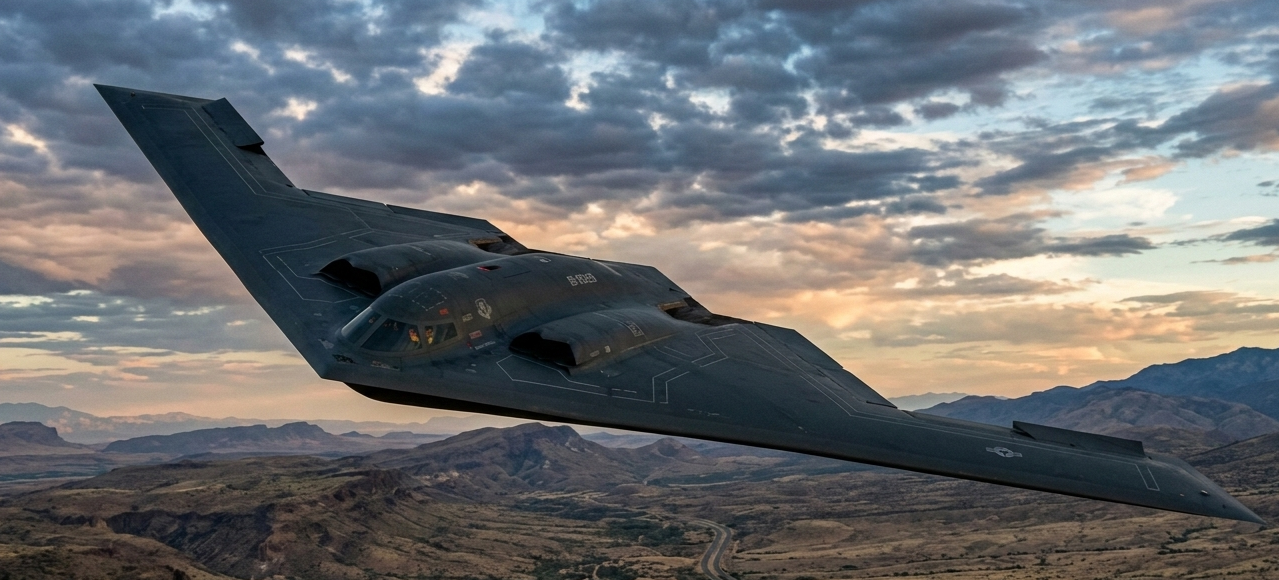
The b2 stealth bomber is one of the most advanced and recognizable military aircraft ever developed. Designed to penetrate heavily defended airspace while remaining nearly invisible to radar, this long-range strategic bomber has played a critical role in modern military operations. Built during the final years of the Cold War, it represents a major leap in aviation engineering, stealth technology, and global strike capability.
Officially known as the Northrop Grumman B-2 Spirit, the aircraft is operated by the United States Air Force and remains one of the most expensive and technologically sophisticated aircraft ever produced.
Development and Background
The b2 stealth bomber was developed by Northrop Grumman in the 1980s as part of America’s effort to maintain air superiority against advanced Soviet air defense systems. The goal was simple but ambitious: create an aircraft capable of flying deep into enemy territory without being detected.
Its first flight took place in 1989, and it officially entered service in 1997. Only 21 units were produced, making it a rare but highly strategic asset in the U.S. military arsenal. The aircraft was designed primarily for nuclear deterrence but has since been adapted for conventional bombing missions as well.
Unique Flying Wing Design
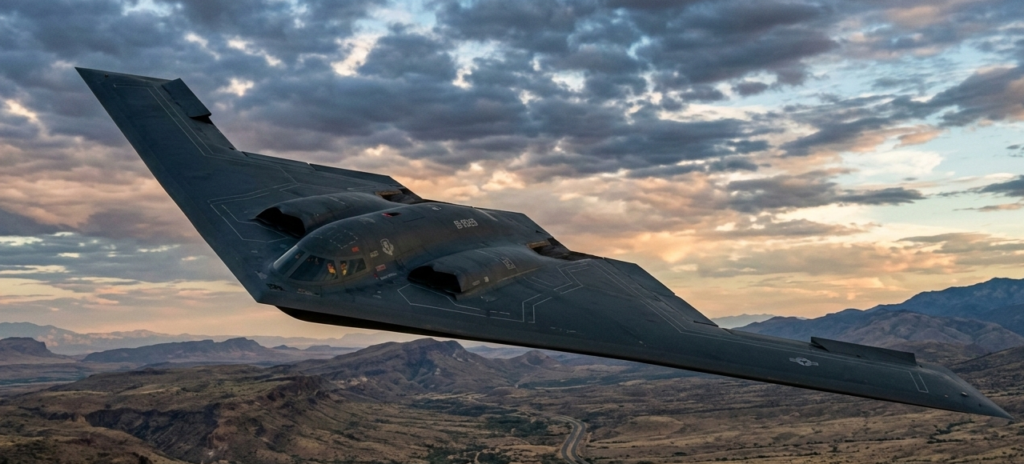
One of the most distinctive features of the b2 stealth bomber is its flying wing design. Unlike traditional aircraft with a fuselage and tail, this bomber has a smooth, curved wing shape that reduces radar reflection.
The absence of vertical stabilizers and sharp edges minimizes the radar cross-section, making it extremely difficult for enemy radar systems to detect or track it. This aerodynamic shape not only supports stealth but also improves fuel efficiency and range.
Stealth Technology
Stealth is the defining characteristic of the b2 stealth bomber. It uses a combination of:
- Radar-absorbing materials
- Low observable design features
- Carefully engineered engine inlets
- Heat signature reduction techniques
These features allow the aircraft to evade sophisticated air defense networks. Even modern radar systems struggle to identify the bomber until it is very close to its target.
Stealth technology is so effective that the aircraft can operate in highly defended environments without escort fighters, something few bombers can accomplish.
Performance and Capabilities
The b2 stealth bomber has impressive operational capabilities:
- Range: Over 6,000 nautical miles without refueling
- Payload: Can carry both conventional and nuclear weapons
- Precision Strike: Equipped with GPS-guided bombs and smart munitions
- Crew: Operated by just two pilots
With aerial refueling, the aircraft can reach nearly any location worldwide. This global reach makes it a key component of U.S. rapid response strategy.
Combat History
Since entering service, the b2 stealth bomber has been deployed in multiple operations. It saw combat use during the Kosovo War in 1999 and later participated in missions over Afghanistan and Iraq. Its ability to strike high-value targets with precision made it especially valuable in the early stages of air campaigns.
Because of its stealth capability, it is often used to disable enemy air defenses and command centers at the beginning of military operations.
Strategic Importance
The b2 stealth bomber plays a major role in deterrence strategy. As part of the U.S. nuclear triad — alongside submarines and intercontinental ballistic missiles — it ensures a credible second-strike capability.
Its ability to penetrate advanced air defense systems means it can deliver payloads even in heavily protected areas. This capability strengthens national defense posture and sends a powerful strategic message to potential adversaries.
Future of the B-2
While the aircraft remains operational, it is gradually being supplemented by the newer Northrop Grumman B-21 Raider, which incorporates next-generation stealth features and digital systems. Over time, the B-21 is expected to replace the B-2 fleet.
However, until full replacement occurs, the b2 stealth bomber continues to serve as one of the most formidable long-range strike aircraft in the world.
Maintenance, Cost, and Operational Complexity
Operating the b2 stealth bomber requires an extraordinary level of maintenance and technical expertise. Because of its advanced stealth coating and specialized materials, even minor surface damage must be carefully repaired to maintain low radar visibility. Ground crews use climate-controlled hangars to protect the aircraft’s sensitive outer layer from environmental exposure.
The cost of each unit has often been cited as exceeding $2 billion when development expenses are included, making it one of the most expensive military aircraft ever built. However, supporters argue that its strategic value and unmatched penetration capability justify the investment.
Due to its complexity, only a limited number of bases are equipped to support the aircraft. Its primary operating location is Whiteman Air Force Base, where specially trained personnel manage mission preparation and long-range deployments.
Role in the Nuclear Triad
The b2 stealth bomber plays a central role in the United States’ nuclear deterrence framework. As part of the nuclear triad — which also includes land-based intercontinental ballistic missiles and submarine-launched ballistic missiles — it provides a flexible and recallable strike option.
Unlike missiles, which cannot be redirected once launched, a bomber can be deployed as a show of force and recalled if diplomatic conditions change. This flexibility adds a strategic advantage in times of crisis. The bomber’s ability to carry nuclear gravity bombs and precision-guided munitions reinforces its deterrence value.
Technological Innovations
Several groundbreaking innovations make the b2 stealth bomber unique:
- Advanced Avionics: The cockpit integrates digital flight controls and mission planning systems.
- Composite Materials: The airframe uses composite structures that reduce radar reflection.
- Low Infrared Signature: Engine exhaust systems are designed to reduce heat emissions, minimizing detection by infrared sensors.
- Long-Endurance Missions: The aircraft has completed missions lasting more than 40 hours with aerial refueling support.
These features ensure that the bomber remains effective even as air defense technologies evolve.
Global Influence and Strategic Signaling
Whenever the b2 stealth bomber is deployed internationally, it sends a strong strategic message. Temporary deployments to allied bases in Europe or the Indo-Pacific region often serve as visible demonstrations of military readiness and alliance commitments.
Such deployments are closely watched by global powers, as they signal deterrence posture and rapid strike capability. The aircraft’s presence alone can influence diplomatic negotiations and regional security calculations.
Transition to the Next Generation
Although still operational, the fleet will eventually be replaced by the Northrop Grumman B-21 Raider. The B-21 is expected to incorporate improved stealth shaping, open-system architecture, and enhanced networking capabilities.
However, the legacy of the b2 stealth bomber will remain significant. It pioneered stealth bomber design and proved that long-range, low-observable aircraft could successfully operate in highly defended environments.
Training and Crew Operations
Flying the b2 stealth bomber requires highly specialized training. Because the aircraft operates long-duration missions that can exceed 30 to 40 hours, pilots must prepare physically and mentally for extreme endurance. Crews typically consist of two pilots — a mission commander and a pilot responsible for navigation and systems management.
Unlike traditional bombers with larger crews, the B-2 relies heavily on automation and advanced flight control systems. Training includes simulator sessions, stealth tactics, electronic warfare awareness, and in-flight refueling procedures. Aerial refueling is particularly critical, as it extends the bomber’s global reach and allows nonstop missions from the continental United States to distant operational theaters.
Global Strike Capability
One of the defining strengths of the b2 stealth bomber is its ability to launch from the United States, strike targets anywhere in the world, and return without landing overseas. This “global strike” capability eliminates the need for forward deployment in many cases, reducing logistical complexity and political sensitivities.
In past operations, B-2 aircraft have flown directly from Whiteman Air Force Base to targets in Europe, the Middle East, and Asia. These missions demonstrate the aircraft’s exceptional range and the effectiveness of in-air refueling support.
The strategic message is clear: the bomber can reach high-value targets with precision while minimizing detection risk.
Electronic Warfare and Defensive Systems
Beyond stealth shaping, the b2 stealth bomber incorporates sophisticated electronic warfare systems. These systems can:
- Detect and analyze radar signals
- Jam hostile tracking systems
- Adapt flight paths to avoid detection
- Coordinate with intelligence networks in real time
Combined with radar-absorbing materials and thermal management systems, these defensive capabilities significantly increase survivability in contested airspace.
Modernization Efforts
Although introduced decades ago, the B-2 fleet has undergone continuous upgrades. Modernization programs focus on improving communication systems, defensive electronics, and compatibility with next-generation precision-guided munitions.
Software updates enhance mission planning and navigation accuracy, ensuring that the b2 stealth bomber remains relevant against evolving air defense networks. These updates extend its operational lifespan until full transition to the Northrop Grumman B-21 Raider is complete.
Strategic Legacy
The legacy of the b2 stealth bomber extends beyond its missions. It reshaped military aviation by proving that stealth bombers could reliably penetrate advanced air defenses. Its flying wing design influenced modern aircraft engineering and inspired future stealth platforms.
As global security environments evolve, long-range stealth strike capability remains a critical element of deterrence strategy. Even with the development of newer platforms, the B-2’s role in shaping modern airpower doctrine is undeniable.
Conclusion
The b2 stealth bomber stands as one of the most revolutionary aircraft in military history. Its advanced stealth design, global reach, precision strike capability, and strategic importance have made it a cornerstone of modern airpower.
From Cold War origins to 21st-century missions, the aircraft continues to demonstrate unmatched capability in high-risk environments. While the next generation of stealth bombers prepares to take its place, the B-2 Spirit’s contribution to aviation and defense strategy will remain a defining chapter in aerospace innovation.
READ MORE: NEWS BLOGS
