



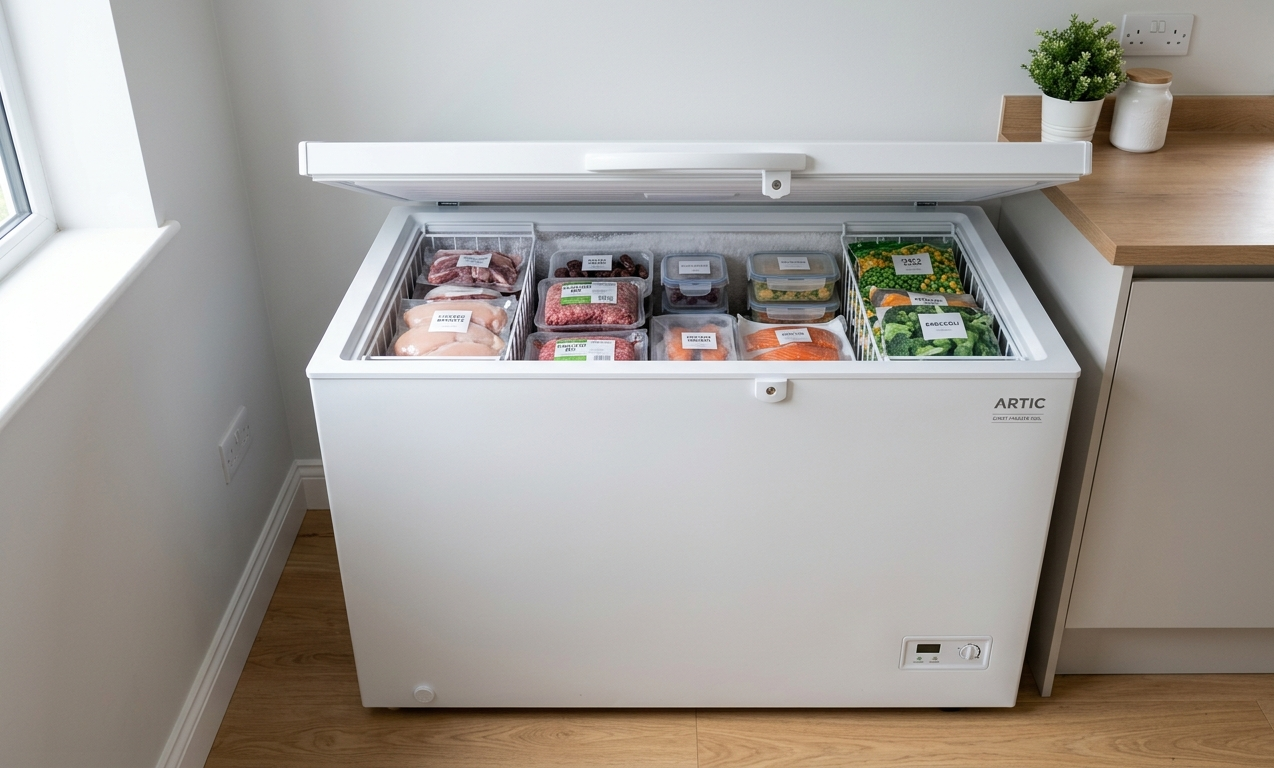
Understanding What a Chest Freezer Is
A chest freezer is a type of deep freezer designed with a horizontal layout and a lid that opens from the top. Unlike upright freezers or refrigerator freezer compartments, chest freezers are specifically built for long-term frozen food storage and large storage capacity. Because of their spacious design, they are commonly used in homes, restaurants, supermarkets, and food businesses that need to store large quantities of frozen products. Many households choose chest freezers when their regular refrigerator freezer cannot accommodate bulk groceries or meal preparation storage.
The working principle of a chest freezer is based on the refrigeration cycle. A compressor circulates refrigerant through condenser and evaporator coils to remove heat from inside the freezer compartment. As the refrigerant evaporates, it absorbs heat from the interior, lowering the temperature and keeping food frozen. The heat is then released outside through the condenser. This continuous cycle maintains a stable freezing environment that preserves food for extended periods.
One unique advantage of the chest freezer design is how cold air behaves inside the unit. Because cold air naturally sinks, it remains trapped inside the freezer even when the lid is opened. This means the internal temperature remains stable longer compared to some other freezer styles. As a result, chest freezers are known for their reliable performance and strong ability to maintain freezing temperatures.
Why Chest Freezers Are Popular in Modern Homes
Chest freezers have become increasingly popular among homeowners who want to store large quantities of frozen food. Families who buy groceries in bulk often rely on chest freezers to store meat, seafood, frozen vegetables, and ready-to-cook meals. The large storage capacity allows users to take advantage of bulk discounts at grocery stores and reduce frequent shopping trips.
Another reason chest freezers are widely used is their ability to preserve food quality for long periods. When food is frozen at stable temperatures, bacteria growth slows dramatically, allowing items to remain safe and fresh for months. Meat, poultry, and fish can remain frozen for extended periods without losing their nutritional value if stored properly. This makes chest freezers an excellent solution for long-term food preservation.
Many people also use chest freezers for seasonal storage. Gardeners often freeze fruits and vegetables harvested during the growing season so they can enjoy them throughout the year. Similarly, families who cook large batches of meals often store them in the freezer for convenient future use. This approach not only saves time but also reduces food waste.
Energy Efficiency and Temperature Stability
One of the most notable advantages of chest freezers is their energy efficiency. Because they open from the top, cold air remains inside the unit instead of escaping quickly when the lid is lifted. This design reduces the amount of work the compressor must perform to restore the internal temperature. As a result, chest freezers generally consume less electricity compared to many upright freezer models.
The thick insulation used in chest freezers also contributes to their efficiency. High-quality insulation helps maintain stable internal temperatures, even when the freezer is opened occasionally. Stable temperatures are essential for preserving the texture, flavor, and nutritional quality of frozen foods.
Another benefit related to energy efficiency is temperature consistency during power interruptions. Chest freezers can keep food frozen for longer periods during power outages because the cold air remains trapped inside the compartment. This feature provides additional protection for stored food and reduces the risk of spoilage when electricity is temporarily unavailable.
Storage Capacity and Organization
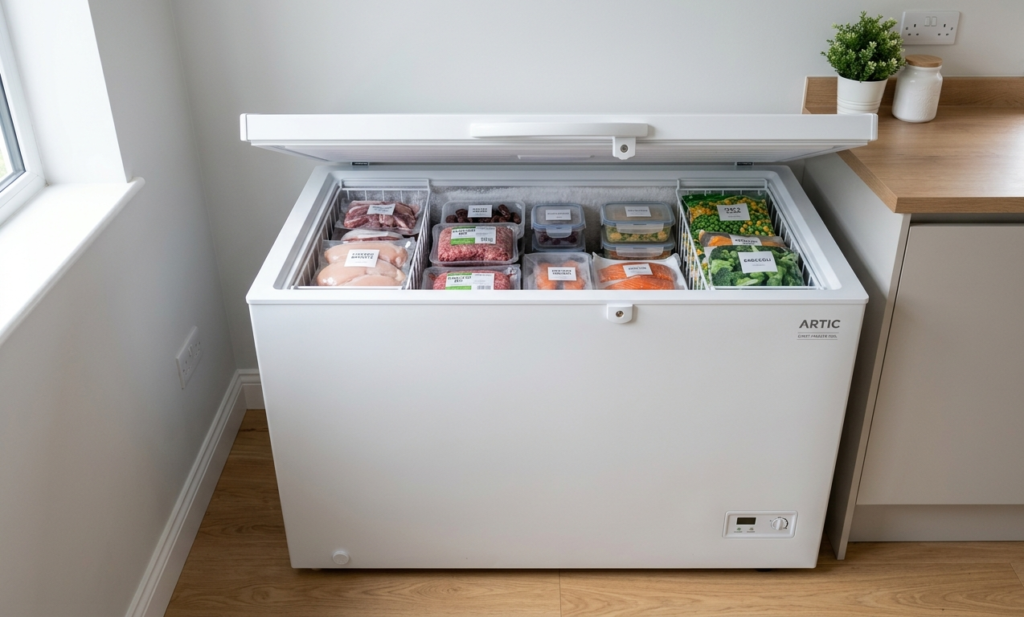
Chest freezers are known for their large storage capacity, which is one of the main reasons people choose them. The open interior design allows users to store bulky items such as whole turkeys, large meat cuts, frozen pizza boxes, and bulk grocery packages. Unlike upright freezers with multiple shelves, chest freezers provide a large continuous storage space that can accommodate items of different shapes and sizes.
To improve organization, many modern chest freezers include removable baskets or wire compartments. These baskets are typically placed near the top of the freezer and are ideal for storing smaller items that need to be accessed frequently. Items like frozen vegetables, ice cream, or packaged snacks can be kept in these baskets so they are easier to reach.
Even with these baskets, organizing a chest freezer requires some planning. Many users group foods into categories such as meats, prepared meals, and frozen vegetables. Proper labeling and storing food in sealed containers also helps maintain order inside the freezer and makes it easier to locate specific items without leaving the lid open for too long.
Key Features of Modern Chest Freezers
Modern chest freezers come with a variety of features that improve convenience and performance. One of the most important features is adjustable temperature control. This allows users to maintain the ideal freezing temperature depending on the type of food being stored. Proper temperature management ensures that food remains frozen safely and maintains its quality.
Some chest freezers also include a fast-freeze or quick-freeze function. This feature rapidly lowers the temperature inside the freezer when new food is added. Rapid freezing helps preserve the texture and nutritional value of fresh foods by preventing large ice crystals from forming.
Other useful features include interior lighting, defrost drain systems, and safety locks. Interior lights make it easier to locate items in deep freezers, especially in low-light areas like basements or garages. Drain systems simplify the defrosting process by allowing melted ice to flow out easily, while safety locks help prevent accidental access, particularly in households with children.
Common Uses of Chest Freezers
Chest freezers serve a wide range of purposes in both residential and commercial settings. In homes, they are commonly used for storing bulk groceries, frozen meats, homemade meals, and seasonal produce. Families who practice meal planning often rely on chest freezers to store prepared dishes that can be reheated later, saving valuable time during busy weeks.
In addition to household use, chest freezers are widely used in food businesses. Restaurants and catering companies store large quantities of ingredients such as meat, seafood, and frozen desserts in chest freezers to ensure consistent supply for cooking. Grocery stores and small food retailers also rely on chest freezers to display and store frozen products.
Outdoor enthusiasts and hunters also find chest freezers particularly useful. Hunters often use them to store game meat after processing, while anglers may store large catches of fish for long-term consumption. The large storage capacity and stable freezing conditions make chest freezers ideal for these purposes.
Advantages of Owning a Chest Freezer
Owning a chest freezer offers several important benefits. One of the most significant advantages is the ability to store food for extended periods without compromising quality. When foods are properly packaged and stored at consistent freezing temperatures, they can remain safe and nutritious for months.
Another advantage is the potential for significant cost savings. By purchasing food in bulk during sales or seasonal promotions, households can reduce grocery expenses over time. A chest freezer allows people to take advantage of these opportunities without worrying about limited storage space.
Chest freezers also contribute to better food management. When excess food can be frozen instead of discarded, households waste less and make better use of their groceries. This not only saves money but also supports more sustainable food consumption practices.
Challenges and Considerations When Using Chest Freezers
Although chest freezers offer many advantages, they also come with certain challenges that users should consider. One of the most common concerns is organization. Because the interior space is deep and open, items may become stacked on top of each other, making it difficult to locate specific foods quickly.
Another consideration is accessibility. Retrieving items from the bottom of a chest freezer may require bending or moving other stored items. While removable baskets help solve this problem to some extent, users still need to manage storage carefully to keep frequently used items near the top.
Space requirements are another factor to consider before purchasing a chest freezer. These appliances are typically larger than upright freezers and require sufficient floor space. They are often placed in garages, basements, or storage rooms rather than kitchens due to their size.
How to Choose the Right Chest Freezer
Selecting the right chest freezer requires evaluating several important factors. One of the first considerations is size and capacity. The freezer should be large enough to accommodate the household’s storage needs but not so large that it wastes space or energy. Understanding how much frozen food the household typically stores can help determine the appropriate capacity.
Energy efficiency is another key factor when choosing a freezer. Models with good insulation and efficient compressors consume less electricity and provide better long-term savings. Energy-efficient appliances are also more environmentally friendly because they reduce overall power consumption.
Additional considerations include durability, ease of maintenance, and storage features. A reliable chest freezer with removable baskets, easy temperature controls, and a durable build can provide many years of dependable service. Choosing a reputable brand and reading product specifications carefully can help ensure a wise purchase.
Maintenance Tips for Long-Lasting Performance
Proper maintenance is essential to keep a chest freezer operating efficiently for many years. One of the most important tasks is regular cleaning. Removing frost buildup and wiping down interior surfaces helps maintain hygienic storage conditions and ensures the freezer functions properly.
Periodic defrosting is also necessary for models that do not include automatic defrost systems. Excessive frost buildup can reduce storage space and decrease efficiency. Allowing the freezer to defrost and cleaning the interior helps maintain optimal performance.
Organizing stored food effectively also contributes to the longevity of the appliance. Keeping the freezer moderately full helps maintain consistent temperatures because frozen items retain cold better than empty space. Labeling food containers and rotating older items to the front ensures that food is used before it reaches the end of its recommended storage time.
With proper care, a chest freezer can last many years while providing reliable frozen food storage. For households that value convenience, efficiency, and long-term food preservation, a chest freezer remains one of the most practical and valuable kitchen appliances available.
READ MORE: NEWS BLOGS
